Skip to content
Home » reading strategies

reading strategies

The Importance of and Strategies for Modifying the Curriculum in the Elementary Classroom

    Having students working on a modified curriculum is not new to the education system, but it can be intimidating, stressful and is not spoken of nearly enough. It is easy to get stuck inside our individual bubbles and silos, but when we step outside and share the strategies and approaches that prove successful for each of us in our respective classrooms, it makes challenging tasks, such as modifying, a little less daunting, and eventually seamless.

    NOVEL IDEAS FOR YOUR CLASSROOM: Turn a fresh page with contemporary books and activities for upper elementary and lower high school English classes 

      Teaching methods and adolescent reading habits have changed significantly over the years, yet the benefits of doing a novel study with a class has held strong. It remains an excellent way to teach literary devices, plot structure, language and theme, and also a way to build students’ world awareness and empathy. Increasingly, though, the teachers we work with have found that student attention spans have shortened and their students may not be as engaged with their class novels. That is where choosing the right novel becomes critical.

      Coloured Cues: Encouraging Active Reading and Literary Thinking

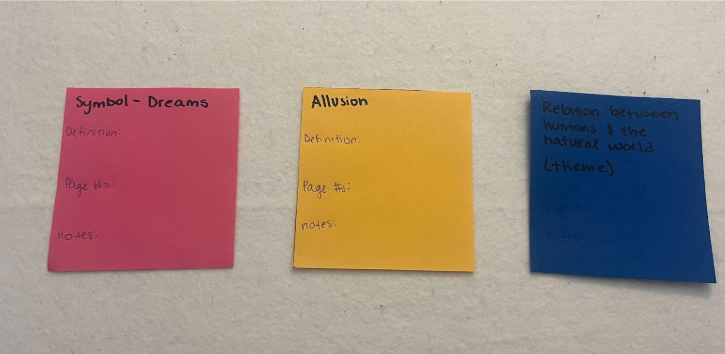
        The following lesson plan is a fairly simple way to keep this classic outline of reading aloud as a class while encouraging engaged reading by integrating discussion and note taking throughout the process. Additionally, this lesson helps teachers assess what students can and can’t identify in the text while reading. This lesson helps students guide their attention, promotes notetaking, and works as peers teaching peers. 

        Using Peter Liljedahl’s Vertical Learning within ELA classrooms

          Vertical learning is a fun and interactive approach to collaborative learning. It utilizes a classroom’s non-permanent vertical writing surfaces, such as chalkboards, whiteboards or chart paper, to have students work together on a single large surface. Seems simple enough, right? Well, according to Liljedhal, there are a few important steps which need to be followed to ensure success while using this technique.