Skip to content
Home

Coloured Cues: Encouraging Active Reading and Literary Thinking

Coloured Cues: Encouraging Active Reading and Literary Thinking

    Reading aloud is an important practice in ELA classrooms and is often used. Typically, the teacher or students read aloud, and once the reading is finished, the class discusses the content of the related chapters or passages. I created the lesson plan that follows as a response to my personal experience with divided attention or passive listening when reading in class. 
    Celebrating a Tradition of Connection, Collaboration and Care

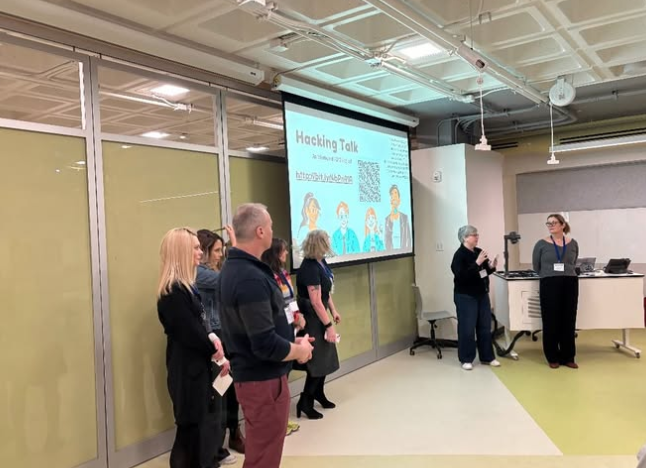
      On a bright and sunny morning in March 2025, the ATEQ community excitedly met for the 50th anniversary of our flagship conference, Springboards. Hosted within McGill University’s Faculty of Education, this year’s iteration of Springboards provided an essential venue for connection, collaboration and care amongst a diverse group of attendees and presenters, including ELA educators teaching within elementary, high school and university classrooms, B.Ed. and MATL student teachers, librarians, and pedagogic consultants.

      FIFTY YEARS! How English Teachers Grew a Conference

        In 2025 much has changed in our ELA community, and not all for the better. But despite current issues and concerns, ATEQ’s support for SPRINGBOARDS and classroom-based pedagogy continues to attract educators from all levels of the system. 

        Race Comes Knocking: Making Space for Racial Literacy

          Teachers are continuously asked to consider and incorporate essential understandings into their pedagogy and practice.  While these asks can be numerous and at times daunting, their importance remains.

          My ask is that educators make space for racial literacy, which encompasses the knowledge, skills, and awareness needed to examine and deepen our understanding of race and racism, in order to take action.

          Telling New Stories: Teaching Ms. Marvel: No Normal in the Secondary ELA Classroom

            In the spring of 2025, I had the opportunity to share an original unit plan at ATEQ’s Springboards conference – an experience that felt like both a celebration and a call to action. The unit I presented centered around G. Willow Wilson’s Ms. Marvel: No Normal, a graphic novel that not only engages students (and teachers alike) but invites them to think deeply about identity, representation, and whose stories get told. 

            The Importance of and Strategies for Modifying the Curriculum in the Elementary Classroom

              Having students working on a modified curriculum is not new to the education system, but it can be intimidating, stressful and is not spoken of nearly enough. It is easy to get stuck inside our individual bubbles and silos, but when we step outside and share the strategies and approaches that prove successful for each of us in our respective classrooms, it makes challenging tasks, such as modifying, a little less daunting, and eventually seamless.

              NOVEL IDEAS FOR YOUR CLASSROOM: Turn a fresh page with contemporary books and activities for upper elementary and lower high school English classes 

                Teaching methods and adolescent reading habits have changed significantly over the years, yet the benefits of doing a novel study with a class has held strong. It remains an excellent way to teach literary devices, plot structure, language and theme, and also a way to build students’ world awareness and empathy. Increasingly, though, the teachers we work with have found that student attention spans have shortened and their students may not be as engaged with their class novels. That is where choosing the right novel becomes critical.

                Coloured Cues: Encouraging Active Reading and Literary Thinking

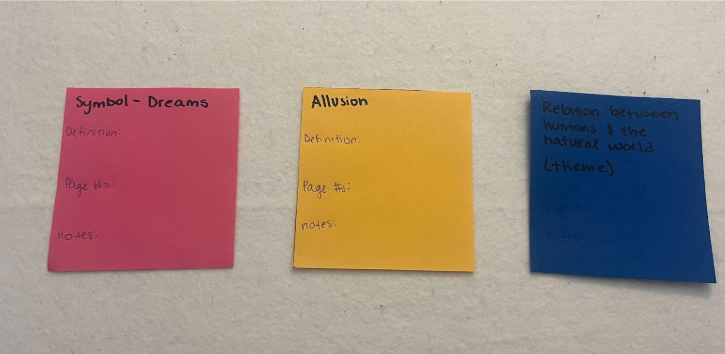
                  The following lesson plan is a fairly simple way to keep this classic outline of reading aloud as a class while encouraging engaged reading by integrating discussion and note taking throughout the process. Additionally, this lesson helps teachers assess what students can and can’t identify in the text while reading. This lesson helps students guide their attention, promotes notetaking, and works as peers teaching peers. 

                  Using Peter Liljedahl’s Vertical Learning within ELA classrooms

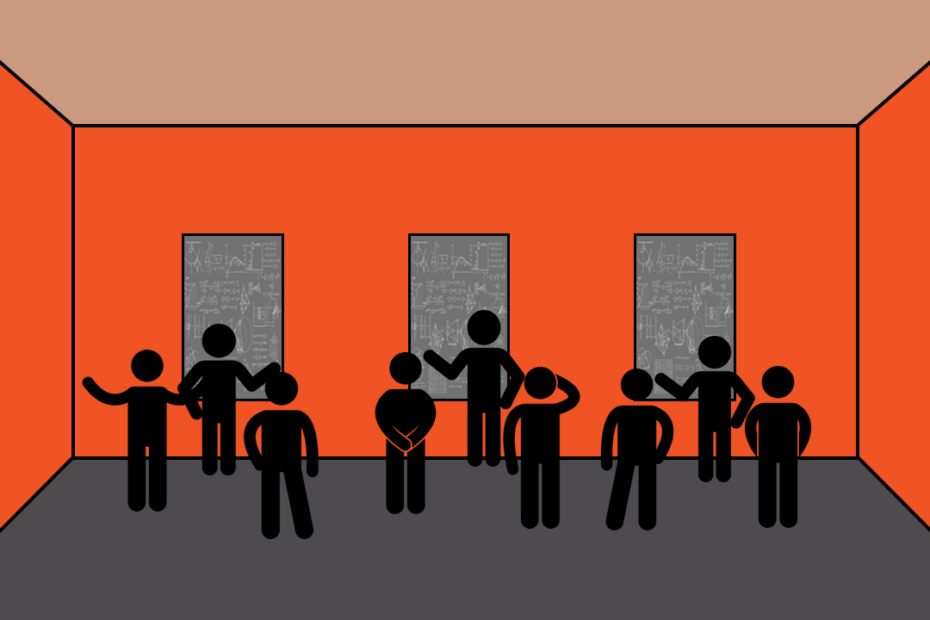
                    Vertical learning is a fun and interactive approach to collaborative learning. It utilizes a classroom’s non-permanent vertical writing surfaces, such as chalkboards, whiteboards or chart paper, to have students work together on a single large surface. Seems simple enough, right? Well, according to Liljedhal, there are a few important steps which need to be followed to ensure success while using this technique.